

I’ll be posting up in my country house for the next few months before returning to Argentina in December and I’ve been in a reflective mood recently.
Most segments of the broad market feel expensive to me while demand in the ‘real’ economy feels weak. My focus on the investing side of things remains on patiently adding to my collection of ‘fee collectors’ mainly royalty/streamers, exchanges, pipelines more recently - utilities.
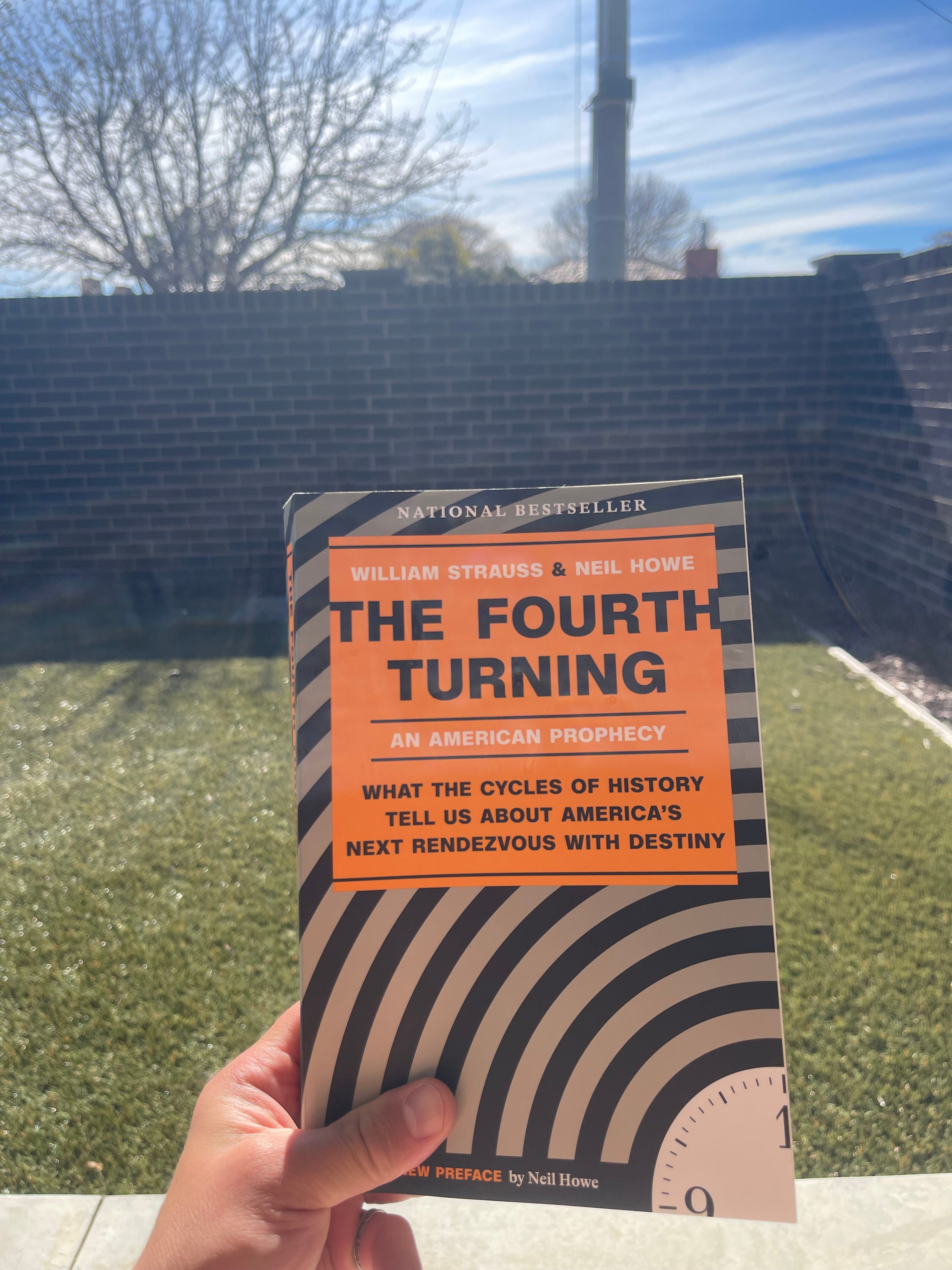
Since reading Neil Howe’s ‘The Fourth Turning’, I’ve regained an appreciation for the concept of viewing time through a more circular lens and overlapping this cyclicality across the linear dimension we modern-day folk usually default to in terms of how we represent the concept of time.
Ergo I though I’d do something a little different in today’s essay and connect the two concepts via an overview of a holding of which I am yet to speak - Hawaiian Electric HE 0.00%↑
The body of the essay outlines the opportunity and my estimate of valuation is made available for premium members.
Please feel free to re-stack if you enjoy.
Hawaiian Electric: Crisis/Opportunity
In August 2023, the wildfires that tore through Maui killed over 100 people and destroyed the town of Lahaina. Alongside that tragedy came allegations that Hawaiian Electric (HE) was partly responsible, having not shut down its lines in high winds. Lawsuits quickly mounted, with potential liabilities estimated at $5–10 billion.
The stock collapsed on the news. From the mid-$30s, HE fell under $10, with the market pricing it as if the situation was irreparable . Most observers stopped the analysis there: too much liability, too little balance sheet = dead.
However it was only then when I started to take an interest.
Once you understand that the nature of the assets are perpetual, whereas the crisis is temporary, a different picture emerges.
Temporal Liability vs. Perpetual Asset
Hawaiian Electric supplies 95% of Hawaii’s electricity. The grid cannot be replicated, nor abandoned. Even in bankruptcy, the wires and plants remain. Litigation is temporal, but monopoly infrastructure is perpetual.
The central question is not whether Hawaiian Electric will pay—of course they will, through settlements, restructuring, or state intervention—but what form of capital will ultimately own the cash flows of the franchise?
The monopoly grid and its revenues won’t just vanish, even in bankruptcy. What changes is who captures them.
We now have much more clarity over the liability resulting from the litigation, let’s outline those first: Hawaiian Electric and its utility arm have finalised a settlement, agreeing to pay $1.99 billion, structured as four equal annual instalments of $478.75 million, starting no earlier than Q4 2025.
My understanding is that these payments are allowed to be made from pre-tax earnings and HE is estimated to do $576 mm in EBITDA this year in 2025. They have already sold off $405 mm worth of non-core assets and raised $558mm in new equity.
The worst of the fund raising appears to be over and it seems they can meet their obligations out of operations moving forward. The liabilities are temporary - the assets are perpetual.
Reliability During Recession
I see the broad economy as weakening and likely heading into a recession. Part of my thesis on Royalties and other fee collectors is that their operations are somewhat insulated from weak demand generally while many cyclicals will see earnings collapse. Utilities are not immune to rate pressure or political scrutiny, but they do offer one of the most reliable earnings streams in a downturn.
Electricity is non-discretionary. Households and businesses may cut travel or consumer spending, but they cannot unplug from the grid. This makes the long-duration equity yield curve more reliable than in most other sectors and it’s rare to get such an attractive entry point when the shares have been beaten down so brutally. Ironically, I doubt a company like this would ever be at an attractive enough valuation if it weren’t for the disaster that had everyone dumping their stock.
The Bet
Downside: Near-term: more equity dilution cannot be ruled out but seems unlikely.
Upside: By 2028, once the liability cloud lifts, HE could re-rate to a standard utility multiple on normalised cash flow. From today’s levels, that would represent a multi-bagger outcome.
The bet is certainly not on this quarter, or even next year. But rather the probability that the perpetual franchise of Hawaiian Electric will, in the fullness of time, reassert itself, and that owning equity in the depths of crisis offers asymmetric reward.
What exactly does that look like?
Let’s take a look by constructing an equity yield curve..
