

Preamble.
In Memory of Murray Stahl
Murray Stahl passed away on April 7, 2026. This memo was already being written when I heard the news.
The quality of your thinking is proportionate to the clarity of your writing.
I have learned so much from Murray but perhaps the most impactful lesson as it pertains to cognitive endeavours is the above. A few years ago, in an interview, when asked about his continual and prolific writings I heard him say:
..You may hold an idea in your head that you think you know well, but then you go to write about it and you get maybe a third or a half a page in and you realise.. you really don’t know what you’re talking about..
(paraphrased)
Inspired by Murray’s insistence on written research as a disciplined practice to improve both thinking and communication I began to write my research thoughts and subject them to the scrutiny of the public.
Committing a thesis to a sentence is qualitatively different from holding it loosely in your head. It demands that you know what you actually think. It exposes the gaps. It makes you honest with yourself in a way that no amount of reading or conversation can replicate on its own.
Murray also had an appreciation for rare books, both for the non-tangible value of their content as well as their tangible value as a collectable asset class.
I had already been assembling a research report on rare books as a store of value when the news of Murray's passing came through. The thesis in these pages draws from various concepts he included in his papers, many of which provided unique insights into sometimes obscure and overlooked asset classes.
The rare canonical book is the natural conclusion of that same line of thought and the subject of this report. Below I examine the use case and performance of physical rare copies as a store of value and a stealth means of wealth transfer completely immune to any shortcomings of the digital world and safe from any tyrannical government who might outlaw gold, seize wallets and freeze bank accounts yet at the same time be oblivious to you crossing a border checkpoint with over $500,000 of value bound in hardcover, tucked safely under your arm and right under their noses.
Books have been storing the distilled thought of civilisation since Gutenberg invented the printing press in 1440 at the latest. It is a physical object and a written argument simultaneously. It is, I believe in the truest sense, his kind of asset.
I hope, in my small way, to honour his legacy: That the written word is the foundation of serious investment thought, that original research is not a differentiator but a prerequisite, and that the willingness to think and write independently, even when the conclusion is uncomfortable or unpopular, is the an edge that cannot be indexed away.
This report is for him, with admiration for what he built and gratitude for the example he set. May his legacy live on.
The Royalty King April 9, 2026
Classic Literature as a Store of Value
This report makes a specific argument: that investment-grade rare editions of the great canonical novels constitute one of the most unusual and under-appreciated stores of value available to a private investor. Not necessarily due to their average annualised return rate (ARR) being spectacular, but due to their possession of a combination of properties that no other asset class simultaneously possesses:
They appreciate in real terms.
They carry zero correlation to financial markets.
They are physical, non-digital, non-trackable and non-reportable.
Their portability provides extraordinary value across any border without triggering a single question. I document the ARR on confirmed transactions across five canonical works and estimate some works from my own personal library to put numbers to the thesis.
I. The Unique Property Set Of Books
The Border Property. A first edition of Don Quixote worth $500,000+ fits in a carry-on bag. It looks like a book because, well, it is a book. It has no serial number, no GPS chip, no registry entry, no digital fingerprint. An X-ray sees paper and leather. A sniffer dog smells old paper. A customs officer sees a traveller carrying a book. Gold bars of equivalent value weigh approximately 10 kilograms and trigger density alerts. Bitcoin leaves an immutable blockchain trail. A painting requires cultural property documentation and export permits. The rare book sits in a different category entirely and most collectors, authorities and border agencies are unaware of how much value can move in this form.
II. Books As Stores Of Value
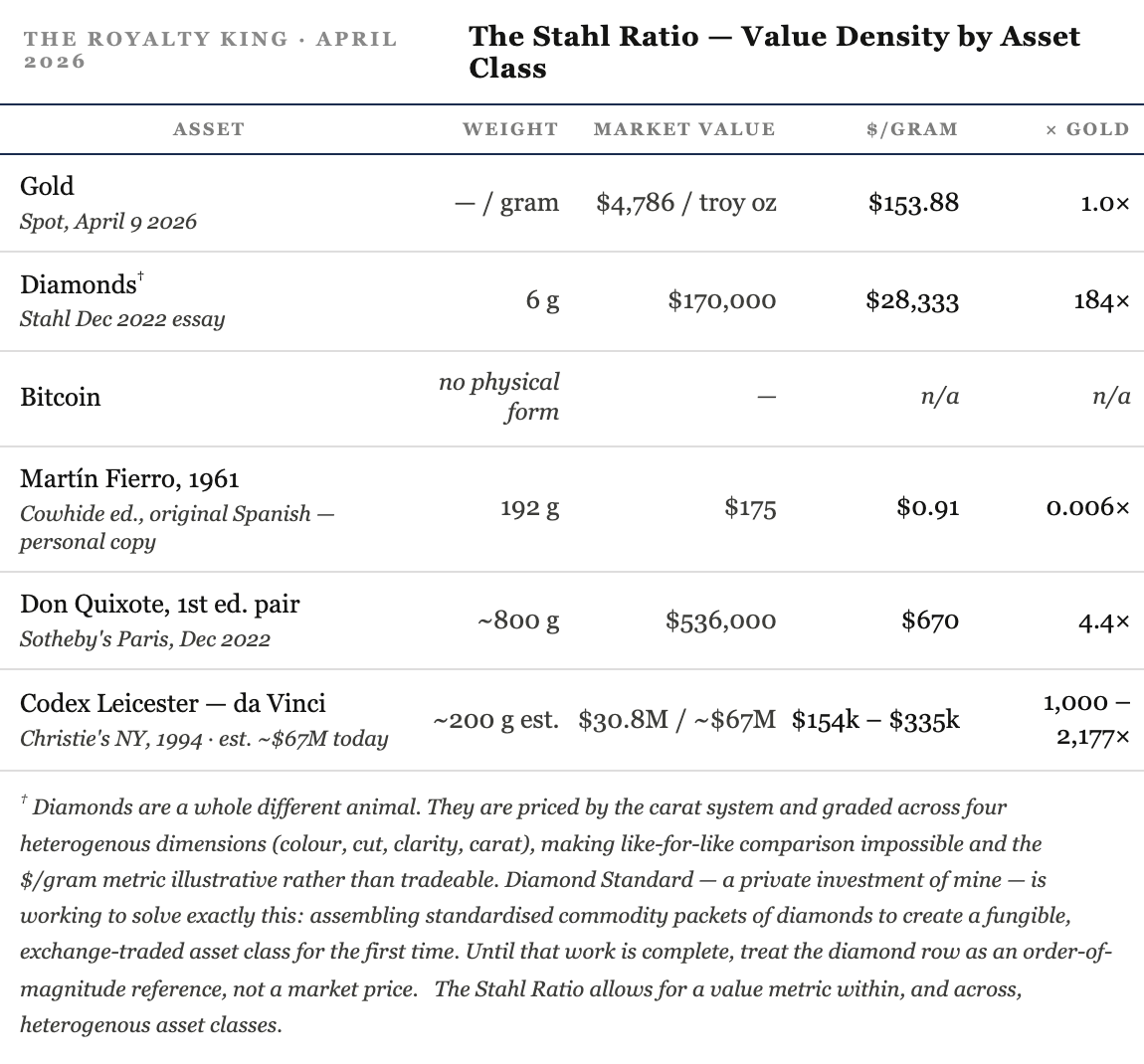
An under-appreciated consideration when comparing stores of wealth is an object’s value-density. Murray was the first person to impress upon me its importance in cross-asset analysis for the purposes of storing wealth in his brilliant paper on diamonds. The reader will note throughout the paper an observance to an asset’s value-density or value per unit of weight and dimensions.
From this day forth I shall refer to this metric as the Stahl Ratio in his honour.
To see it function across different assets and different members of a heterogenous asset class, the inputs of my research have been made visual below:
III. History & Returns Of Canonical Works
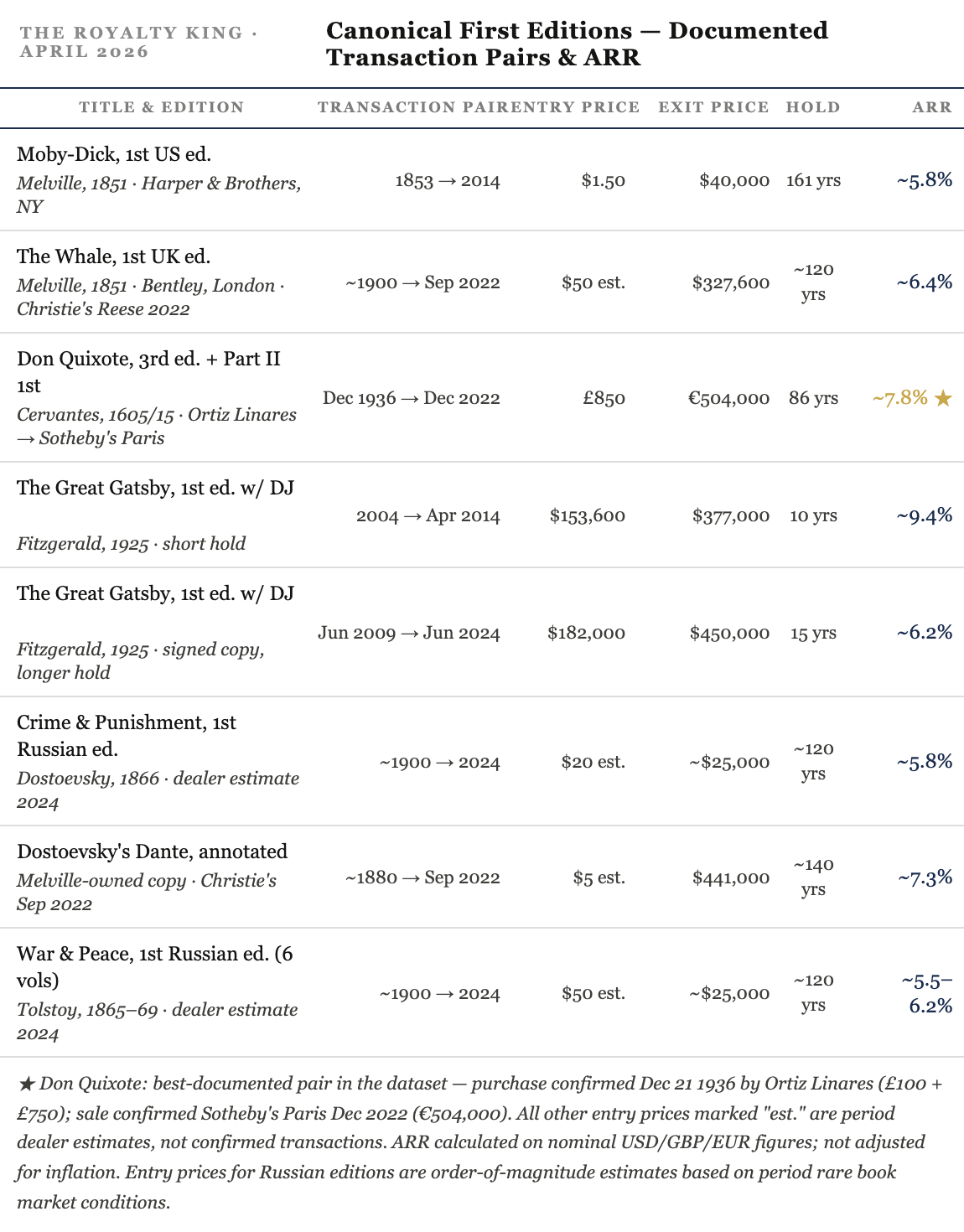
With the concept of value-density now considered, let us explore the growth rate of the underlying value stored across a sample of rare books to test their inflation resistance across large time periods.
I’ve searched for confirmed transactions and dates on the same titles where possible and first present the ARR in nominal terms.
Una palabra sobre Don Quixote..
Published in Madrid in 1605 (Part I) and 1615 (Part II) by Juan de la Cuesta. The first modern novel and the most widely translated work in any language after the Bible. At that time it would have been priced in Real de Ocho (8 piece), the Spanish currency of the time which weighed c. 27.47g of 93% silver and would be valued at ~$70 USD. A large consignment of Part I first editions was lost in a shipwreck near Havana shortly after publication; surviving copies of the 1605 first edition are among the rarest objects in Western bibliography. The 1608 third edition, corrected by Cervantes himself, and the basis of all subsequent translations, is the collector's document of record. Interestingly, throughout the full span of a Quixote first edition’s life just sitting on a shelf; every currency in which that book could have been priced has been either abolished, re-denominated, or inflated into a fraction of its original value. (El Ocho, La Peseta and arguably the Euro couldn’t outlast a simple classic).
The Great Gatsby (1925)
As this anecdote involves royalties, I simply cannot resist including it..
Published April 1925 and a failure in Fitzgerald’s lifetime, he earned approximately $8,400 in total book royalties from it during his life. In 1929 his domestic royalties for the year amounted to $5.10. He died in 1940 believing it forgotten, yet post-war it become the definitive American novel; by 1960 it was selling 100,000 copies annually.
The rare book market for Gatsby is driven overwhelmingly by one physical quirk: the dust jacket designed by Francis Cugat, printed slightly too large for the book and prone to tearing. The first issue jacket features a lowercase ‘j’ in ‘jay Gatsby’ on the rear panel, hand-corrected to uppercase in ink by the publisher! Fitzgerald wrote to his editor: “For Christ’s sake don’t give anyone that jacket you’re saving for me. I’ve written it into the book.”
Without the original jacket it’s quoted at $3,000–4,000. With it, in fine condition: $350,000–450,000. The jacket is worth approximately 100 times the book!
My Favourite Writer Of All Time — Jorge Luis Borges
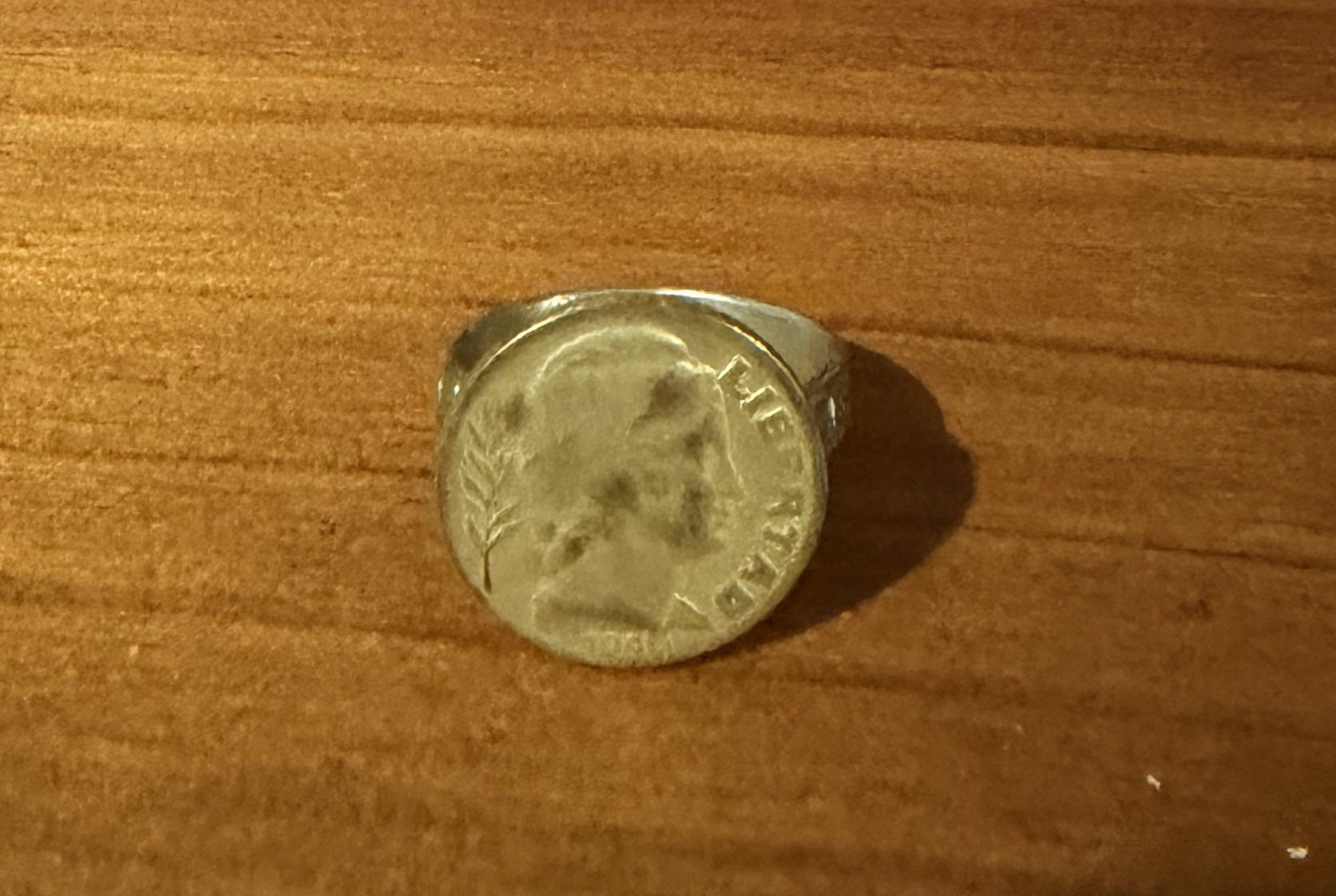
An unabashed reverence for the great Argentine author means I cannot complete this report without investigating his works from an investible angle. The issue is, given Argentina’s historical presence as the poster child for hyperinflation, I doubt you could pick a more difficult currency to try to adjust and calculate value change over time. The Argentine peso has been re-denominated four times since 1942; each time eliminating zeros the previous government had printed into existence. In fact, speaking of collectibles, I own a ring with a 5 peso piece on it from 1946 which, at the time, bought roughly one day’s unskilled labour and for which I paid 1,000 new-currency pesos in 2023..
El jardín de senderos que se bifurcan, (The Garden of Forking Paths) was published in Buenos Aires, in December 1941 and was Borges's first collection of short stories. In 2024, a first edition, inscribed by Borges sold at auction for £16,640
From an estimated $5USD initial price to £16,640 (~$21,133 USD) over 82 years implies a nominal ARR of~10.7%, eclipsing the entire comparable dataset - an impressive feat considering it hasn’t even hit antique status yet.
Meanwhile the currency in which his books were originally priced has been re-denominated out of existence four times over. Not even the most profligate central bank in recent history could out-print the great Borges!
IV. Stealth Wealth
The properties described in Section I combine into a specific argument about rare canonical books as a form of portable, non-digital, jurisdiction-agnostic stored value.
Consider; A $500,000 first edition of Don Quixote weighs half a kilogram. It fits in a carry-on bag. Gold of equivalent value weighs approximately 10.5 kilograms and triggers density alerts at every X-ray. Bitcoin of equivalent value leaves an immutable blockchain trail traceable to exchange KYC records. A painting of equivalent value requires export permits, property documentation, and crated freight. The book crosses the border as a book.
And lest you think this idea is reserved for only the truly high end works. Let me leave you with real-life examples from one of my (many) bookshelves.
La Divina Comedia - Dante Alighieri
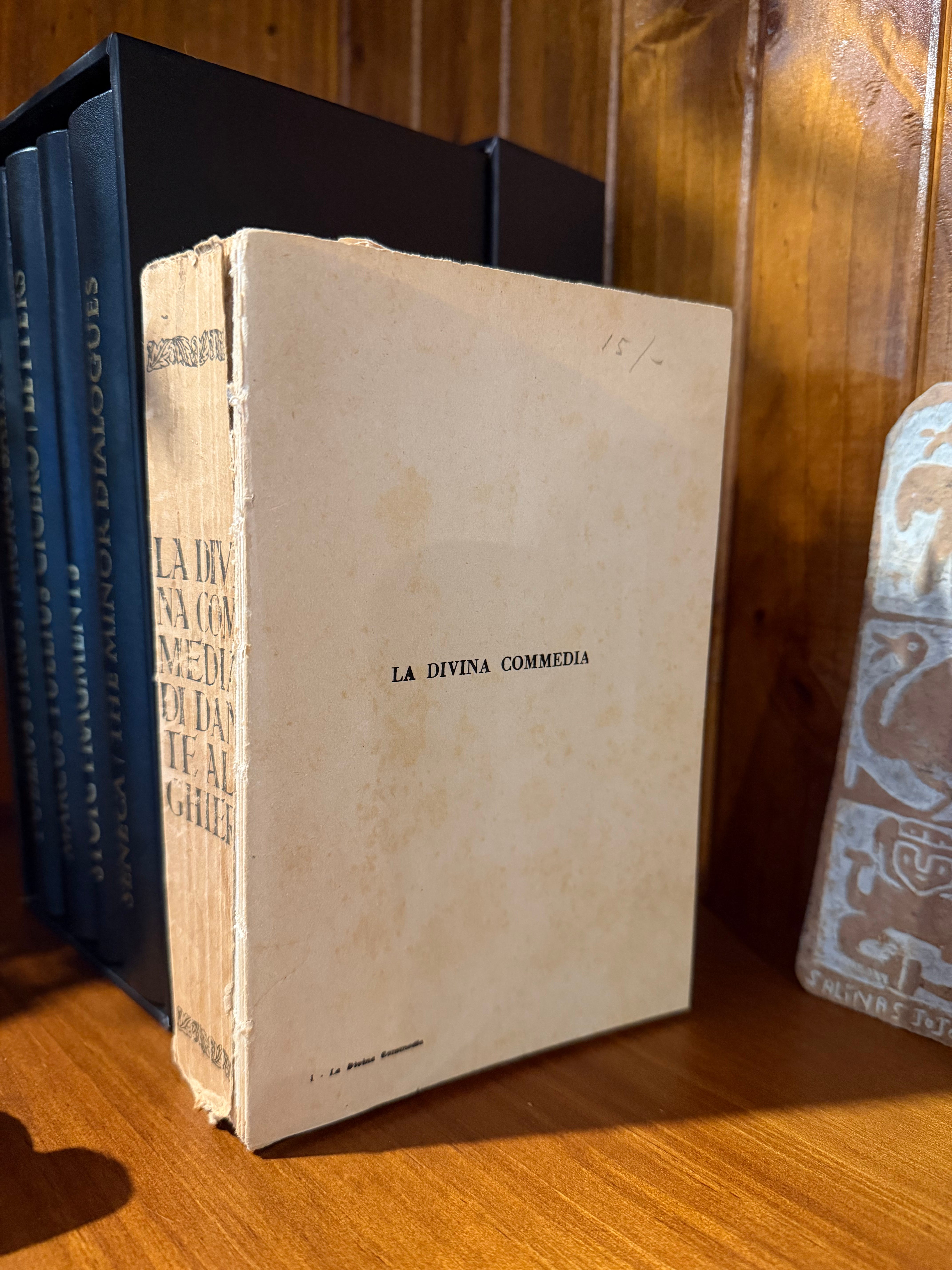
My copy of La Divina Commedia is a 1956 Italian edition, original language, priced in lire, a currency abolished in 2002 having lost the majority of its value since the year this edition was printed. Dante completed the original Commedia in c1320. The 1956 edition is not rare by the standards of this report. But it is older than every financial instrument I own and is yet to default. Best estimate is that it would fetch $80 USD given its frayed condition. Yet from a reconstructed cover price of roughly 1,000 Italian lire (~$1.60 USD equivalent) its estimated ARR of 6.4% is not trivial and was most certainly preferable to holding lire.
Martín Fierro - José Hernández 1961
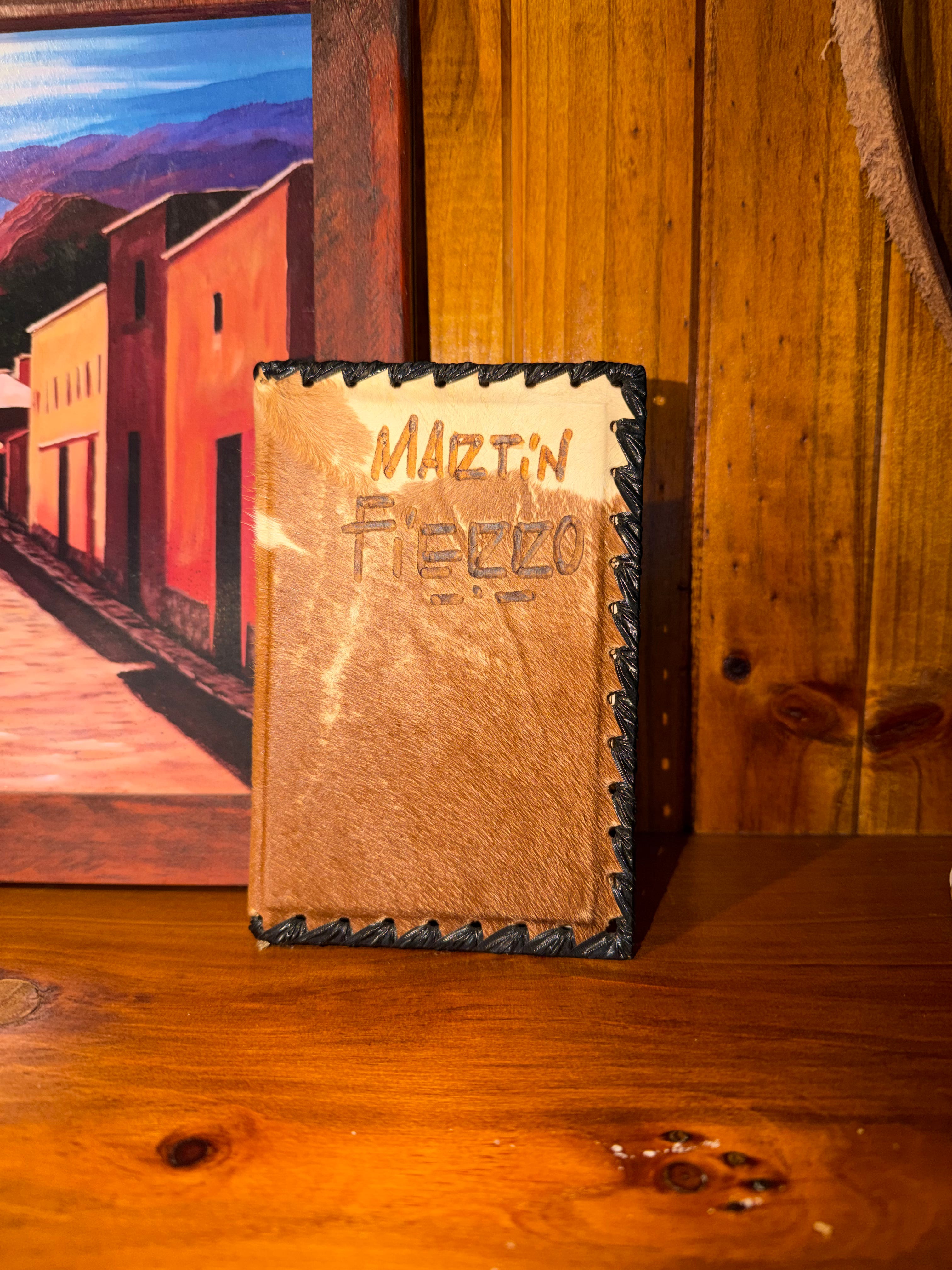
My copy is a first edition of a limited run of 10,000 bound in cowhide. Printed in the original Spanish, in Buenos Aires when the peso traded at roughly 83 to the dollar. Argentina has since re-denominated its currency four times for a cumulative factor of 100,000,000,000:1.
Using best estimates, the sale price in USD terms was ~$1.20 and today should fetch $175 for a nominal ARR of 8% over 65 years.
The Royalty King's Remarks
The case for rare canonical books as an asset class is not about beating equities. It is about three things in combination: a documented real return that outperforms bonds, cash and depending on the copy, even gold over long holds; genuinely zero correlation with financial markets and a set of physical properties that no other asset simultaneously possesses.
The ARR data across the titles studied clusters between 5.8% and 10.7% nominal for documented transactions over 10 years or more. Real returns vary and are harder to calculate, yet I would argue given many of these works were published in countries whose currency literally died — sometimes many times over— the value of holding a portable store of wealth which could later be transported to, and exchanged in, a country with a stronger currency is an underrated free call option on geopolitics.
What’s the optionality value on a management-free, correlation-free return on an object you can carry in a bag, read on a plane, and pass to the next generation without a transfer agent?
A rare book is a historically validated, intellectually serious, and physically unique store of value. It’s also fun to read.
Benjamin Demase
— The Royalty King Report
This is a really good excuse to buy some expensive books. Thanks for the article