

“I don’t write music out of silence, I merely punctuate the music with periods of silence”
-David Steindl‑Rast (paraphrased)
Similarly, under a fiat standard, we don’t experience break out periods of inflation but rather some periods of inflation are tempered by interruptions (silence).
I hope someone quotes me on that one day…
My focus this year has mainly been finding ways to outpace the debasement of global fiat money which appears to be decaying at an annualised rate of 7-8% since 2000.
I see that some of my friends who have only know the Anglo-speaking world of (relatively) slowly decaying currencies are slowly starting to realise they’ve spent their entire lives inside a bubble of false security as they see their cash eroding with evermore ease, at an ever faster rate thanks to their central banks and governments providing ever more liquidity injections.
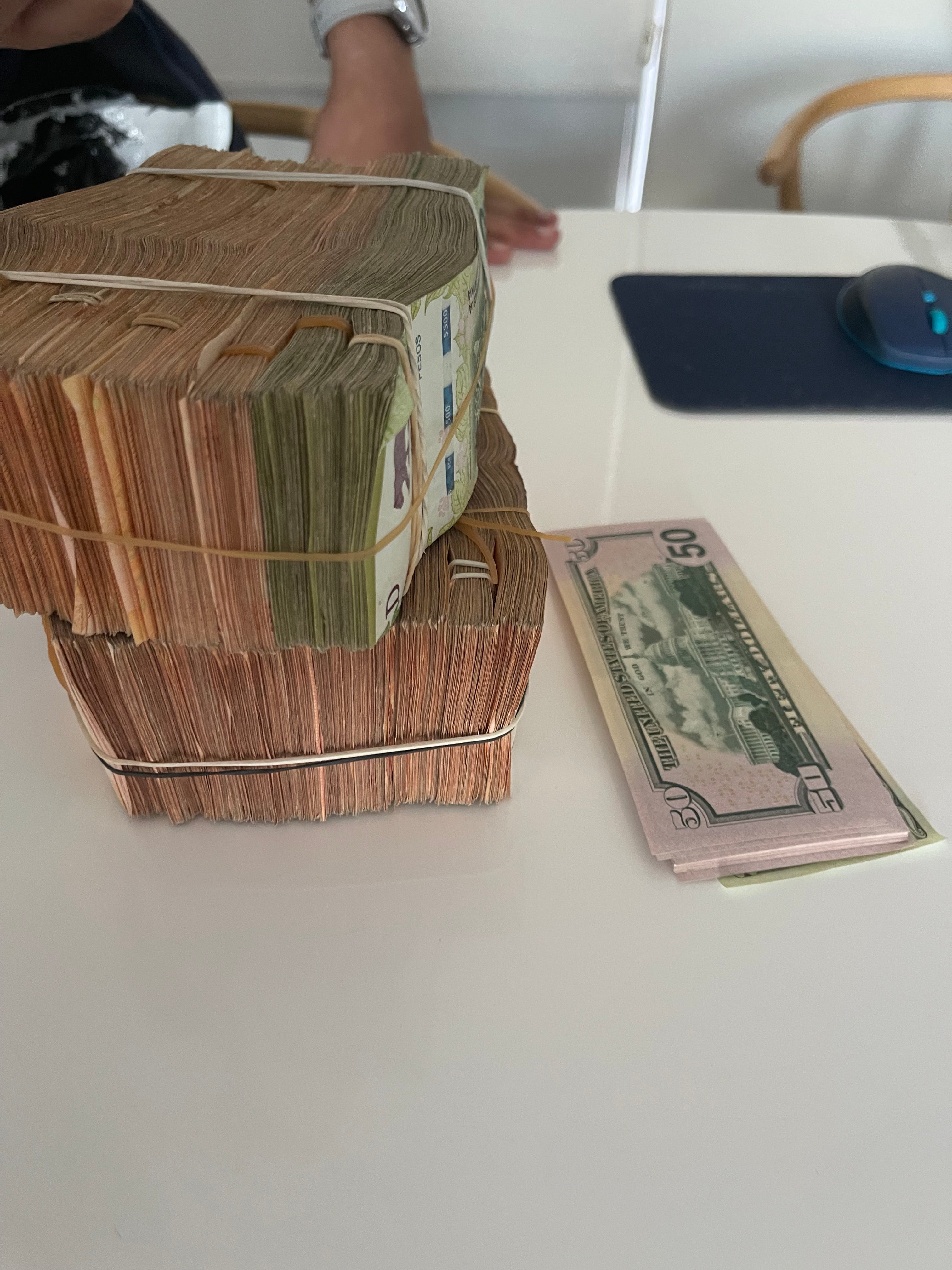
One day they soon may experience the fun of weighing their fiat notes in order to transact (hopefully not).
My (unpopular) take has been that much of successful investing will simply come down to keeping pace with this and that is something that many investors and speculators likely won’t achieve, regardless of the noise they make online.
They’d simply be better off systematising their fiat earnings into gold which has historically shown to, at a minimum, keep pace with the expansion of the money supply. Something I outlined in my January piece here:

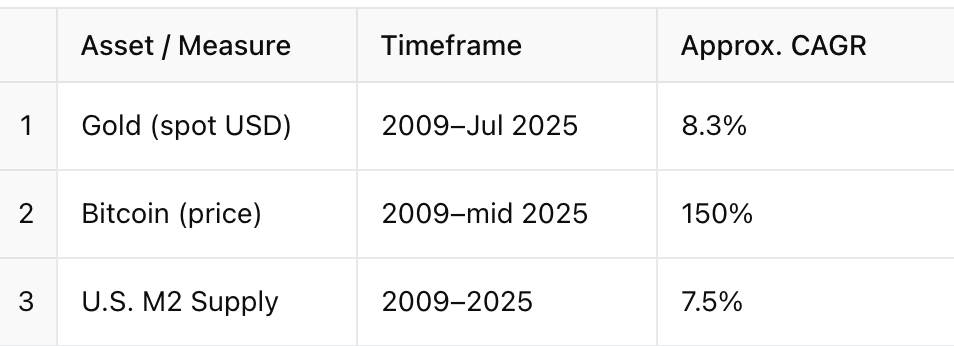
In fact, since 2000 gold has outperformed the global M2 expansion AND the S&P500 even with the dividends re-invested.

But if you’ve been reading my musings for a while you’ll already be on top of this.
The question today is if ‘digital gold’ aka Bitcoin, might provide an alternative way to outpace inflation and if that is indeed the case, can I find some ways to outperform even Bitcoin?
So far we’ve seen BTC more than keeping pace with the global liquidity injected into fiat currencies since 2013.
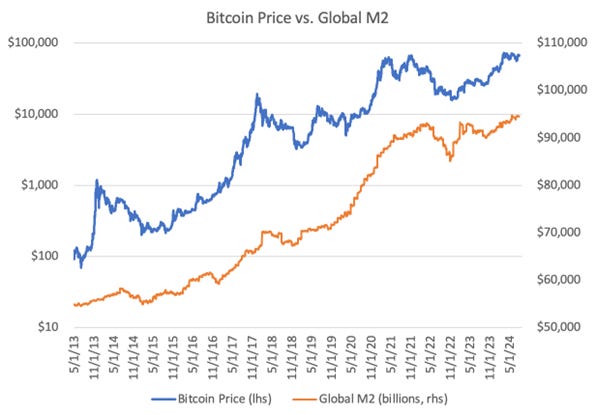
The thing is that BTC’s growth does depend on the adoption of its network, however that very adoption is likely to be encourage by the continued debasement of fiat currencies as individuals and institutions look to it as a better store of value due to its fixed supply. As I outline in my last piece, this doesn’t require that those individuals and institutions move all of their capital into BTC, merely a 2.1% of global nominal wealth moved across to BTC would bring us to ~$480K per coin by 2036.

This is not a certainty, but I do believe it’s highly likely and provides the basis for an attractive asymmetric speculation. In the text below I provide premium members with some derivative trades that both increase the potential payoff AND decrease the risk - yes it’s possible.
But first let’s examine some of the things that may derail Bitcoin, however unlikely they may be.
Governments around the world stop inflating the fiat currencies…. LOL.
I won’t go through the whole thesis again here but safe to say that even if a sovereign wanted to constrain their power and popularity (which they hate) by defaulting (which they won’t), then backing their currency with hard money, the debt load is such that it’s not even clear that it would be possible. Particularly in the USA - the world’s reserve fiat currency, where since 2007/8 the soft nationalisation of banking institutions like Fanny Mae and Freddie Mac is such that the sovereign debt and private debt are now inextricably linked.
Not to mention a default would likely trigger a civil war...
So, safe to take that one off the table.
Rising interest rates
This IMHO is the short term threat to bitcoin and we have seen BTC struggle in such an environment on two prior occasions:
2016–2018 cycle:
Fed raised rates from 0.5% → 2.5%.
Bitcoin still surged in 2017 (adoption + halving), then corrected in 2018 during peak tightening and balance sheet runoff.
My take: BTC can rise in early hike phases if liquidity is still strong but tends to struggle when real liquidity drains.
2022–2023 cycle:
Fed hiked aggressively (0.25% → 5.5%) to ‘combat inflation’.
Bitcoin dropped from ~$68k (Nov 2021 peak) → ~$16k (Nov 2022 trough).
As the Fed slowed hikes and liquidity stabilised in 2023, BTC mooned.
As you can see, in the short term the FED can scare the price of BTC down, however given that the US government is now due to pay over $1.3 Trillion in debt interest alone in 2025 and that figure continues to grow as a % of debt/GDP, sustained increases in interest rates are not viable as the US would need to go ‘full Zimbabwe’ in a higher rate environment by injecting an Argentina-esque amount of liquidity into the system to service higher debt costs.
So, without making this article too long, the question for me is not whether BTC succeeds in cracking Hayek’s code as a form of private money (I’m doubtful will).
The only thing I care about is does it outperform increases in liquidity relative to gold?
If you’ve read my content you’ll know that I invest in gold royalties for sustainable long-term alpha on over the gold price.
But how do you do that in BTC?
Let me share some ideas..
